

We picked up a $340 reward for carrying two boxes of protein powder and a pair of sneakers from Miami to Rio de Janeiro, tucked into a suitcase that already had ten days of our own stuff in it. The shopper could not get that brand locally at anywhere near the US price. We were flying that route anyway. That is the entire pitch of Grabr in one trip.
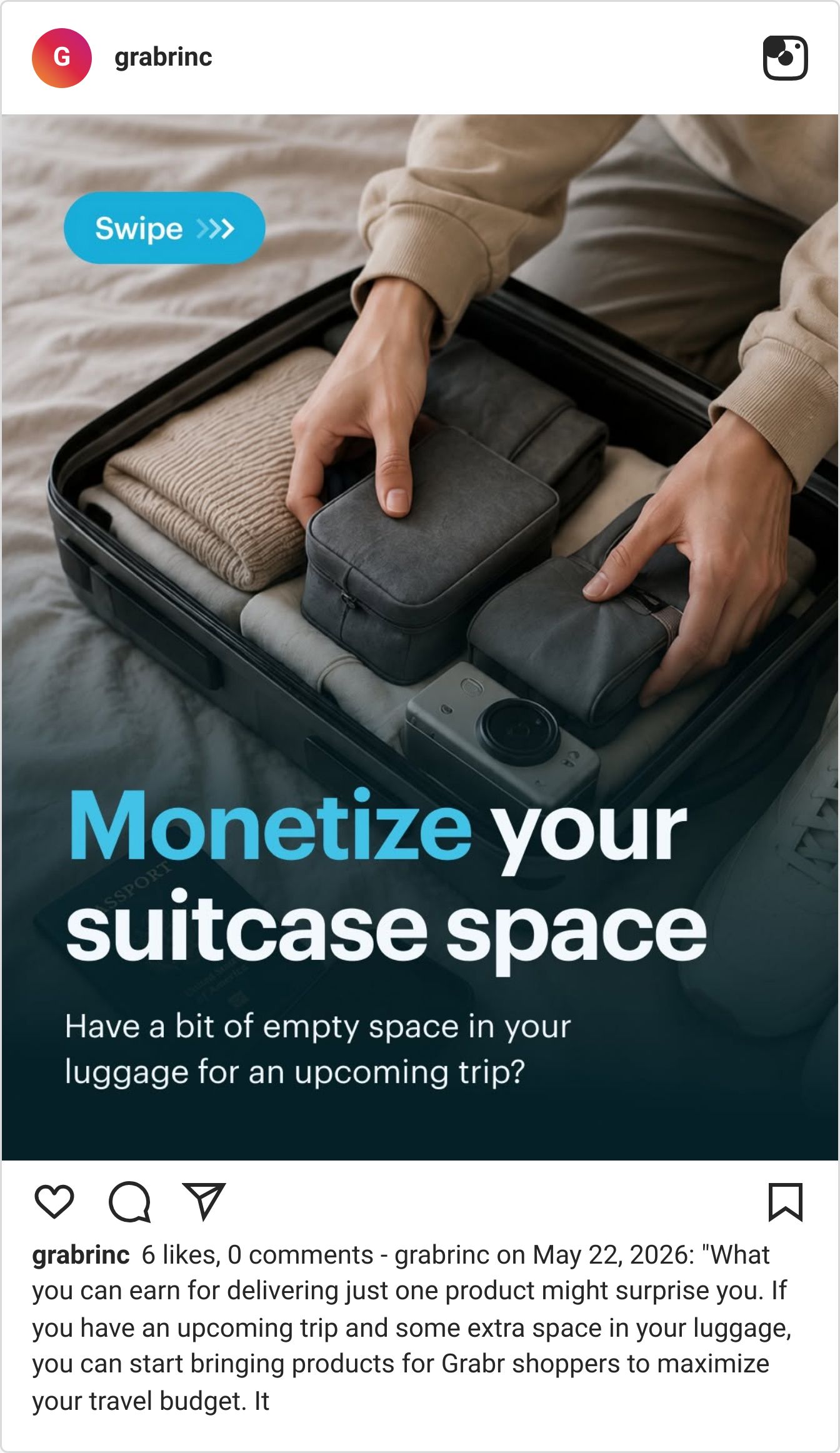
Grabr is a peer-to-peer delivery marketplace. Shoppers post a link to a product they want from another country, travelers heading that direction make an offer to buy and carry it, and the shopper pays a reward on top of the item's cost once it arrives. For a digital nomad already booking flights between countries every few weeks, it turns luggage space you were not using into a real, if modest, source of trip money.
Before any of that coordination happens, you need a way to message a shopper and confirm pickup details the moment you land, not after you have found the hotel WiFi. An Airalo eSIM activated before you board means your phone works from the jet bridge, which matters when a shopper is waiting on a delivery time.
What Grabr Actually Is
Grabr connects two kinds of users. Shoppers want something that is expensive, unavailable, or hard to find in their own country, usually a specific electronics model, a beauty product, or a supplement brand sold cheaper or exclusively somewhere else. Travelers browse requests tied to the cities they are actually flying to, buy the item with their own money at checkout, and hand it to the shopper in person once they land.
The difference from a standard courier or international shipping service is the human link in the middle. A package shipped through a freight forwarder sits in a customs queue with nobody advocating for it. An item carried by a traveler who already has a boarding pass for that route moves at the speed of a normal flight, and there is a real person the shopper can message if something is unclear about size, color, or timing.
How the App Works Step by Step
The flow is the same whether you are picking up a single request or building a habit of checking routes before you book. You add your upcoming trip, browse open requests along that route, and make an offer with a reward amount attached.
Making an Offer as a Traveler
Once you list a trip from one city to another, Grabr shows you shopper requests tied to that route. Each request lists the product, a link to where it can be bought, and any notes on size or model. You set the reward you want for delivering it and submit an offer. The shopper can accept, counter, or pass.
Buying, Packing, and Delivering the Item
After a shopper accepts your offer, you buy the item yourself, at a real store or online, using your own card. You photograph the receipt and the packaged item inside the app, then carry it with you on your trip. Once you land and hand it off, the shopper confirms receipt, which releases both your reward and the reimbursement for what you spent buying it.

What Grabr Actually Costs
Shoppers pay the item's price plus a service fee, which runs roughly 10 to 20 percent of the item's total depending on the order, and sales tax if the item is bought in a US state that charges it. That fee is what funds the traveler's reward, so the shopper is effectively paying for both the product and the person willing to carry it.
Travelers pay nothing to use Grabr itself. The reward you negotiate, commonly landing around 15 to 20 percent of the item's price on top of full reimbursement for what you spent buying it, is yours. The catch is timing, not cost. Payout arrives 3 to 15 business days after the shopper confirms the delivery, so you are floating the purchase price on your own card until then.
Once a reward actually lands in your account, getting it into the currency you are spending day to day without losing a chunk to conversion fees is its own small project. A Wise account set up before you start taking requests means a $340 reward converts at close to the real exchange rate, the same cross-border banking setup that makes sense for any nomad moving money between countries regularly.

How Much You Can Actually Earn
The range is wide and depends entirely on what you are willing to carry. A pack of gum or a small skincare item might earn you $9. A laptop, a specialty stroller, or a bulk supplement order can pay out a few hundred dollars in a single delivery. Most travelers who check requests regularly on a route end up carrying a handful of items per trip rather than one big one, which is where a $200 to $300 trip total tends to come from.
Treat it as trip-funding money, not a primary income. The reward covers a chunk of a flight or a week of groceries in a new city. It does not replace client work or a remote salary, and the delivery volume on any given route depends on how many shoppers happen to want something from exactly where you are flying.

Where Grabr Falls Short
The payout window is real. Waiting up to 15 business days after a shopper confirms receipt means you need to be comfortable fronting the purchase price for a while, which matters more on a $400 electronics delivery than a $20 skincare order.
Request volume is uneven. Busy routes between major cities have plenty of shopper demand. A flight to a smaller city might show almost nothing worth carrying, so this only pencils out as income on the routes you are already flying anyway. Customs can also hold up a delivery, particularly with electronics or anything that looks commercial in volume, and a shopper disputing that an item arrived as described is a real risk with no guaranteed fast resolution.

How We Use It as Digital Nomads
We check open requests on a route before we book the flight, not after. If there is nothing worth carrying, we book the ticket on price alone and move on. If there is a request that fits inside the space we already have, we take it.
The rule that keeps this worth doing is simple: we never pay for an extra bag to carry someone else's item. If a delivery would push us into checked-bag fees or an overweight charge, the reward has to clear that cost first, and most of the time it does not. Treated that way, Grabr becomes a bonus that offsets part of a flight we were already taking, not a reason to plan a trip around.
Travel Tools
Booking.com
Helpful for private studios and long term deals.
Skyscanner
Simple for tracking flight prices in and out of your destination.
HolaFly
Reliable eSIM for immediate mobile data all over the world. Get 5% discount on all plans.
Amazon Travel Essentials
Useful for chargers, locks, and laptop gear.
Kiwi
Great for multi city travel across South America.
Is Grabr Worth It
Grabr works best as a habit, not a plan. Checking requests on routes you are already flying costs nothing, and the rewards that fit inside your existing luggage without extra fees are close to free money. Chasing it as a real income stream, or paying for extra bag space to make a delivery pencil out, is where the math stops working in your favor.
Resources for your next move:
Airalo eSIM — working data from the moment you land, so you can coordinate a handoff before you find your hotel
Wise — move a Grabr payout into local currency without losing a chunk of it to conversion fees
Safetywing Nomad Insurance — coverage for the extra trips you take on the strength of a delivery reward
Booking.com — book your base once you land with a suitcase lighter than it started
FAQ
Is Grabr safe to use?
Grabr holds the shopper's payment until the traveler confirms delivery and the shopper confirms receipt, which protects both sides from a straightforward no-show. As with any peer-to-peer marketplace, communicate through the app, photograph the item and receipt at every step, and treat a request that feels off as one to pass on.
How do you get paid on Grabr?
Once a shopper confirms they received the item, Grabr releases your delivery reward and reimbursement for the purchase price directly to your linked bank account, typically within 3 to 15 business days.
Does Grabr charge travelers a fee?
No. Grabr does not charge travelers to use the platform. The service fee that funds the traveler's reward comes out of what the shopper pays, not out of the traveler's earnings.
What can you not deliver on Grabr?
Grabr requests generally exclude restricted or illegal items, and anything that would violate customs rules in the destination country is on the traveler to avoid. If an item's legality or import limits are unclear for the country you are flying into, check the destination's customs rules before accepting the offer.
How long does it take to get paid on Grabr?
Payout lands within 3 to 15 business days of the shopper confirming they received the item, not from the moment you hand it over. Build that window into your budgeting if you are counting on a reward to cover a specific expense.
Affiliate Disclaimer: Some of the links in this post are affiliate links, which means if you purchase through them, Cheers to Travels may earn a small commission, at no extra cost to you. We only recommend products we truly believe in.


