

The bars on Rua Farme de Amoedo in Ipanema were full thirty minutes before Brazil kicked off against Serbia at the 2022 World Cup. By the time the first goal went in, half the bar was on the street. Uber surge pricing hit 4x before the celebration cooled down. That match was played in Qatar. Rio was 9,000 miles away. None of that mattered.
The FIFA World Cup 2026 runs from June 11 to July 19. The host cities are in the United States, Canada, and Mexico. Rio de Janeiro is not among them. And yet, if you are a digital nomad based in Zona Sul this June and July, you are in one of the best places on earth to watch it.
This guide covers where to find the fan zones, which bars you actually want to be in during a Brazil match, how to plan your day around kickoff times, and how to get home when the city erupts.
Why Rio Is Still the Best Place to Watch the World Cup
Brazil has not hosted a World Cup match since 2014. That is twelve years of watching the tournament from living rooms, phone screens, and crowded bars. The anticipation has not gotten smaller from having no home games. If anything, it concentrates.
Rio's relationship with football is not something you read about. You feel it. When Brazil plays, the city pauses. Construction stops. The metro empties out. Restaurant staff disappear into the back to watch on a tablet. Then the match ends and the city starts again, either in celebration or in a collective silence that is equally loud.
Digital nomads who were in Rio during the 2022 group stage describe it as one of the best working-abroad experiences they have had. The schedule works in your favor. You take a morning work block, eat lunch on the beach, and find a bar stool before the 4pm kickoff. You are surrounded by people who care more about the match than anything else happening in the world that afternoon.
No host city fan zone replicates that. A neutral city hosting a match has visitors. Rio has Cariocas. That is the difference.
The Official Fan Zone on Copacabana Beach
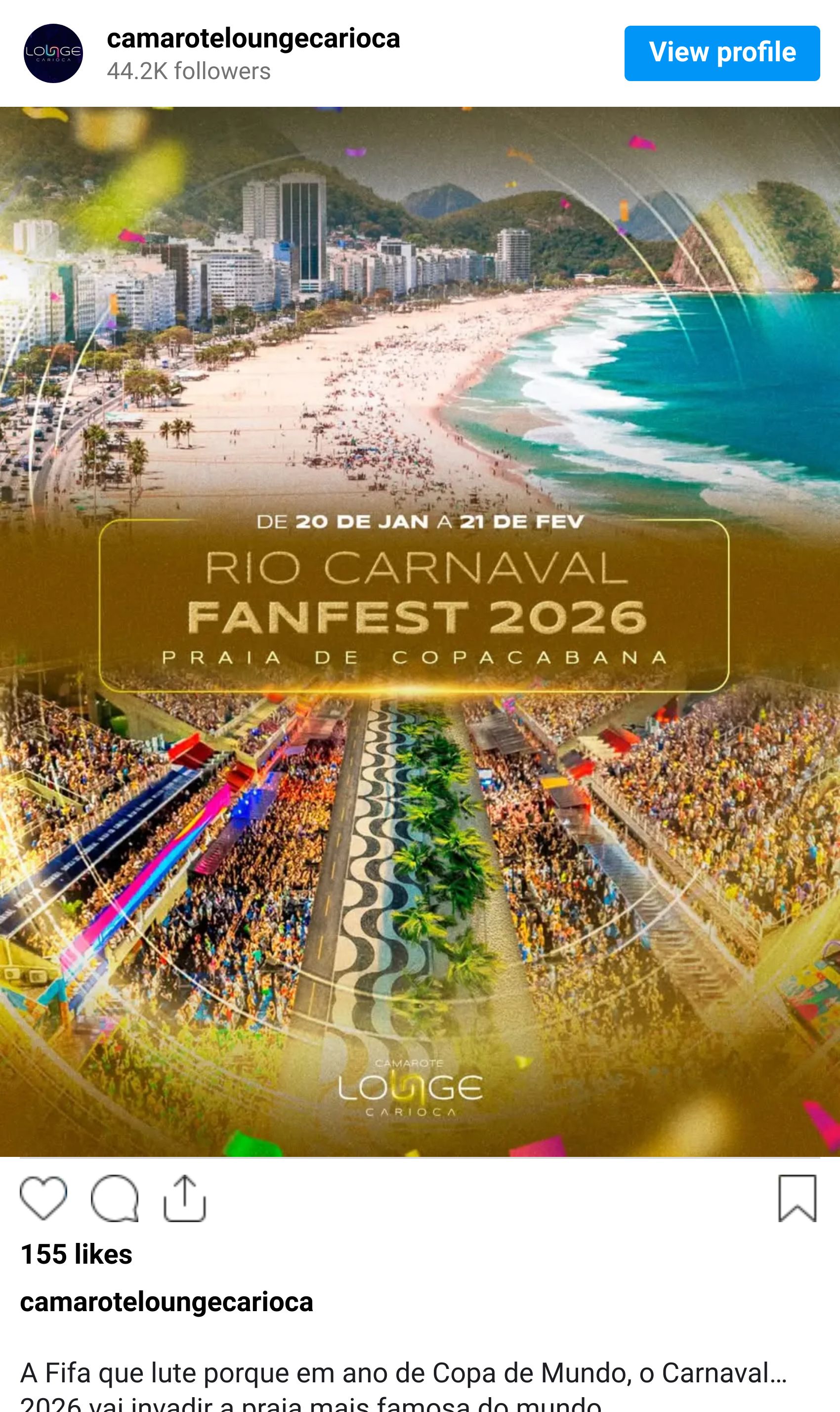
Brazil set up a free outdoor fan zone on Copacabana beach for the 2014 World Cup and repeated the format for major international matches since then. For 2026, FIFA has confirmed a fan zone on Copacabana beach, anchored near Avenida Princesa Isabel at the northern end of the beachfront, in front of the Hilton Hotel.
The fan zone is free to enter. No tickets, no registration. You show up, find a spot in the 6,200 m² arena and watch on the main screen alongside up to 10,000 people. For Brazil matches, the capacity fills fast.
Arrive at least 45 minutes before a Brazil kickoff. The Copacabana beachfront gets dense quickly. If you want a guaranteed spot near the screen, an hour early is better. Bring cash for the food stalls (chopp, petiscos, and grilled snacks), sunscreen if it is a day match, and a charged phone.
Leave your expensive camera and jewelry at your accommodation. The fan zone is not dangerous, but dense crowds attract petty theft. The same caution applies at Carnaval or New Year's Eve on this beach. A phone and some cash in your front pocket covers everything you need.
After the match, the fan zone disperses faster than you would expect. The crowd flows back toward the bars and the street celebrations. If Brazil wins, do not plan on going anywhere for at least two hours.
A good add-on while you are in Rio for the tournament: the Maracana stadium tour. The 2026 World Cup is not played in Rio, but Maracana is the cathedral of Brazilian football, and seeing it during the tournament window fills in the picture. It is worth a morning before or after Brazil's group stage games.

Best Bars to Watch World Cup Matches in Rio, by Neighborhood
The bar question is the one that matters most for a digital nomad choosing where to plant themselves during the group stage. Here is how the neighborhoods break down.
Ipanema
Rua Farme de Amoedo is the center of it. The bars along this stretch have outdoor seating that spills onto the street on match nights. The crowd skews young, international, and loud. If you want to watch with other expats and nomads mixed in with locals, this is the spot.
The bar scene on Rua Vinicius de Moraes and Rua Teixeira de Melo is a few blocks away and slightly calmer. Better if you want a seat and a real view of the screen rather than standing three deep at the bar.
Leblon
Leblon runs quieter than Ipanema and draws more people who live in the neighborhood. The bars around Rua Ataulfo de Paiva are less crowded by tourists, which means cheaper beer and more of a neighborhood watch party feel. This is where to go if you want to experience the match the way a Carioca who grew up in Zona Sul actually experiences it.
Copacabana
Copacabana has the highest density of screens and the highest density of people. The bars along Avenida Atlantica have views of the beach and multiple screens per venue. The crowd is more tourist-heavy here than in Ipanema or Leblon. For the fan zone, Copacabana is the answer. For a bar seat with room to breathe, Ipanema or Leblon tends to work better.
Santa Teresa
Santa Teresa watches football the way it does everything else: with a slightly different energy from the rest of the city. The neighborhood bars up in the hillside are small, packed, and genuinely local. You will likely be the only non-Carioca in most of them, which is the point. Getting there on match day involves either Uber (expensive post-match) or the bonde if it is running. Not the easiest logistics, but worth experiencing once.

Sports Bars vs. Neighborhood Bars: What to Know
Sports bars in Rio cater to an international crowd. Multiple screens, English-language menus, staff who speak some English. They are comfortable and reliable for finding a good viewing angle.
Neighborhood bars (botecos) are the other option. One or two screens, plastic chairs, chopp on tap, and a crowd that will either explain the offside rule to you in rapid Portuguese or simply include you without words. If you know ten words of Portuguese, you will be fine in a boteco during a Brazil match. The football does most of the communicating.
If you are deciding where to base yourself in Rio during the group stage, staying in Ipanema or Copacabana puts you within walking distance of the best match-day energy without needing transport. We have a full breakdown in our guide to the best neighborhoods in Rio for digital nomads.
Book accommodation in Ipanema, Leblon, or Copacabana before Brazil's fixture dates are confirmed. Prices in Zona Sul jump sharply around big match days. Booking.com lets you filter by neighborhood and cancellation policy, which matters if your travel timeline shifts with the schedule.
Match Kickoff Times in Rio: Planning Your Day Around Brazil's Schedule
Brazil runs on Brazil Standard Time, which is UTC-3. No daylight saving time during the June-July window.
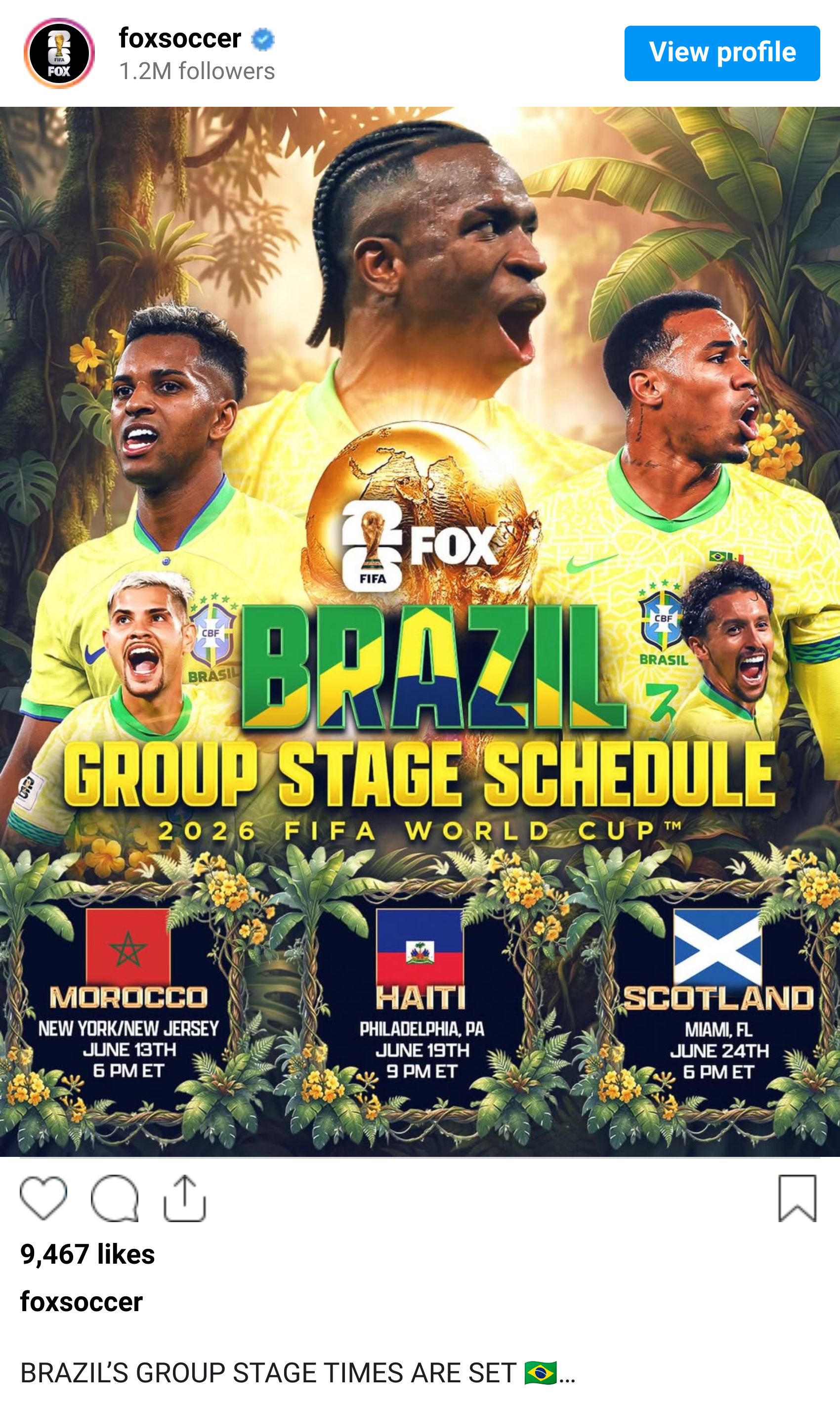
FIFA World Cup 2026 group stage matches run at four daily slots: roughly 1pm, 4pm, 7pm, and 10pm BRT. Brazil's national team fixtures are confirmed below.
Brazil's group stage schedule in BRT:
June 13: Brazil vs Morocco, 7pm BRT (MetLife Stadium, New York)
June 19: Brazil vs Haiti, 10pm BRT (Lincoln Financial Field, Philadelphia)
June 24: Scotland vs Brazil, 7pm BRT (Hard Rock Stadium, Miami)
For digital nomads, the 7pm BRT slot works well. It gives you a full day of work and beach time before settling in at a bar for the evening. The 10pm match on June 19 is the exception: plan for a late night, or catch it from wherever you end up after dinner.
The 7pm slot is also the best for atmosphere. Evening crowds are larger, the bars are fuller, and the city has had all day to build anticipation. Nothing else happens on those nights until after the final whistle.
Brazil's knockout stage schedule (round of 32 through the final) runs from late June through July 19. If you are staying in Rio for the full month of June and into July, you will catch multiple Brazil matches in the knockout rounds too. The round of 32 begins June 28.
Getting Around Rio on Match Days
The metro is the right answer for getting to the fan zone or to Ipanema before a match. Line 1 connects to General Osório station, which puts you one block from the Ipanema bar strip. Line 4 connects Barra da Tijuca to Ipanema as well.
The metro gets crowded after Brazil matches end, particularly after a win. If you are at the fan zone on Copacabana, expect the metro station to be dense for 30 to 45 minutes post-match. Either ride it out (standing room, slow moving) or wait in a nearby bar for an hour before heading back.
Uber surges fast after big Brazil matches. Leaving within 15 minutes of the final whistle in Copacabana or Ipanema will cost you. Wait an hour and the surge drops. If you are within walking distance of your accommodation, walk.
Taxis are an option. Agree on the price before getting in or insist on the meter. This applies any time in Rio, but particularly on high-demand nights.
Safety on match days in Zona Sul follows the same logic as any other night in Rio. The areas around Copacabana, Ipanema, and Leblon are not the neighborhoods where you need to be hypervigilant. Stay on well-lit streets, keep your phone in your pocket rather than in your hand, and do not walk alone to the beach after midnight. We cover the full neighborhood-by-neighborhood safety picture in our Rio de Janeiro safety guide.

Tools & Resources
Airbnb
Good for monthly stays with strong discounts.
Booking.com
Helpful for private studios and long term deals.
Skyscanner
Simple for tracking flight prices in and out of Rio.
HolaFly
Reliable eSIM for immediate mobile data in Brazil. Get 5% discount on all plans.
Digital Nomad Essentials
Useful for chargers, locks, and laptop gear.
Brazil Travel Essentials
Everything you need for Brazil, and nothing you don't.
Kiwi
Great for multi city travel across South America.
Plan Your Stay Around the Group Stage
The FIFA World Cup 2026 group stage runs June 11 to June 27, with knockout rounds through July 19. A three-week stay in Rio covers the full group stage and takes you well into the knockout rounds. If you are choosing between base cities for June, the World Cup alone is a strong argument for Rio.
Book accommodation in Zona Sul before Brazil's fixture dates are confirmed. Prices in Ipanema and Copacabana rise fast around big match days. Booking.com lets you compare by neighborhood, filter for extended stays, and check cancellation policies if your plans might shift.
The Maracana stadium tour rounds out the experience. Even without hosting a match, it is the most significant football ground in the world, and the 2026 tournament is as good a reason as any to see it.
If you are staying in Brazil for three weeks or longer, make sure your insurance covers the full nomad-in-Brazil scenario. SafetyWing covers digital nomads on extended international stays, including medical costs and evacuation, which many short-trip policies skip entirely.
For the history and culture behind what you are watching, our Rio football culture guide covers why Cariocas treat every Brazil match like it is a final. And if you want a full picture of what your month will cost, our Rio cost of living guide for nomads breaks down the real numbers for a June-July stay.
FAQ
What time do Brazil's World Cup matches kick off in Rio?
Brazil runs on Brazil Standard Time (UTC-3), with no daylight saving time in June-July. Brazil's confirmed group stage kickoff times are: June 13 vs Morocco at 7pm BRT, June 19 vs Haiti at 10pm BRT, and June 24 vs Scotland at 7pm BRT. General daily match slots across the tournament run at roughly 1pm, 4pm, 7pm, and 10pm BRT.
Are there official fan zones on Copacabana for the World Cup 2026?
Yes. FIFA has confirmed a fan zone on Copacabana beach for the 2026 tournament, anchored near Avenida Princesa Isabel at the northern end of the beachfront. The arena covers 6,200 m² with a capacity of 10,000 and features a large main screen and food vendors. Entry is free. For Brazil matches, arrive at least 45 minutes early.
Do you need tickets to watch at the fan zone?
No. The Copacabana fan zone has historically been free to enter. Some FIFA Fan Festival formats in other cities require advance registration. Check the FIFA Fan Festival page for confirmed entry requirements as the tournament approaches.
Is Rio safe during the World Cup 2026?
Match day crowds in Zona Sul are high-energy but not dangerous. The main risk is petty theft in dense crowds, particularly around the fan zone and near busy bar strips after a Brazil win. Leave valuables at your accommodation. Our Rio safety guide covers what to know before you go.
Which neighborhood has the best World Cup atmosphere in Rio?
Ipanema for a mix of local and international energy, centered on Rua Farme de Amoedo. Leblon for a more local, less touristy experience. Copacabana for maximum volume and the fan zone. All three are walkable from each other along the beachfront, so you can move between them during the night.
Affiliate Disclaimer: Some of the links in this post are affiliate links, which means if you purchase through them, Cheers to Travels may earn a small commission, at no extra cost to you. We only recommend products we truly believe in.


