

Pride Month in Brazil is not a weekend. It is a month-long rotation of parades, beach parties, circuit events, and cultural nights spread across multiple cities, and June 2026 is shaping up to be one of the biggest on record. The São Paulo parade alone draws more people than any other Pride event in the world. Rio has its beach scene running all month. Salvador brings a cultural dimension unlike anything you will find in North America or Europe.
If you are planning a trip around Pride 2026, the logistics matter more than most people realize. Accommodation books out across São Paulo months before the parade. Flights into Guarulhos on Pride weekend are priced like New Year's Eve. Getting the timing right, knowing which city matches what you are looking for, and understanding what Brazil's Pride scene is actually like on the ground will make the difference between a trip that lands and one that frustrates.
Use Skyscanner to set a price alert now. São Paulo Pride weekend is one of the biggest flight-price spikes in Brazil's calendar, and alerts give you the window to book before prices jump.
Why Brazil for Pride Month?
Brazil passed same-sex marriage nationally in 2013 through a ruling by Brazil's National Justice Council, making it one of the first countries in South America to do so. Gender identity protections followed in 2018, when the Supreme Court ruled that transgender individuals could change their legal name and gender marker in official documents without requiring surgery or medical evaluation. On paper, Brazil's legal framework for LGBTQ rights is more comprehensive than several Western European countries.
The reality on the ground is more complex. Brazil records high rates of anti-LGBTQ violence, and attitudes outside major metropolitan areas vary significantly. What Pride Month in São Paulo, Rio, and Salvador represents is a different context from daily life in smaller cities or rural regions. These events are massive, public, well-attended celebrations, not quiet gatherings in a private venue.
For international LGBTQ travelers, the practical read is this: Pride Month in Brazil's major cities is genuinely celebratory, heavily attended, and culturally significant in a way that is hard to replicate anywhere else. The São Paulo parade specifically has been a defining event in the global LGBTQ calendar for decades. Going in with an understanding of Brazil as a whole, rather than treating it like a uniformly safe destination, is the honest approach.
For the full year-round picture of Rio as an LGBTQ destination, read our LGBTQ+ destination guide for Rio. For a global comparison of LGBTQ safety by country, see our piece on where it's safe and not so safe to love freely around the world.
São Paulo Pride 2026 (Parada do Orgulho LGBT)
São Paulo's Parada do Orgulho LGBT is the largest Pride parade in the world by attendance. In recent years the event has drawn more than three million people along Avenida Paulista, a figure that regularly exceeds the attendance of Pride events in New York, London, and Sydney combined. It is also free to attend. You show up, you join, and you stay as long as you want.
The Basics
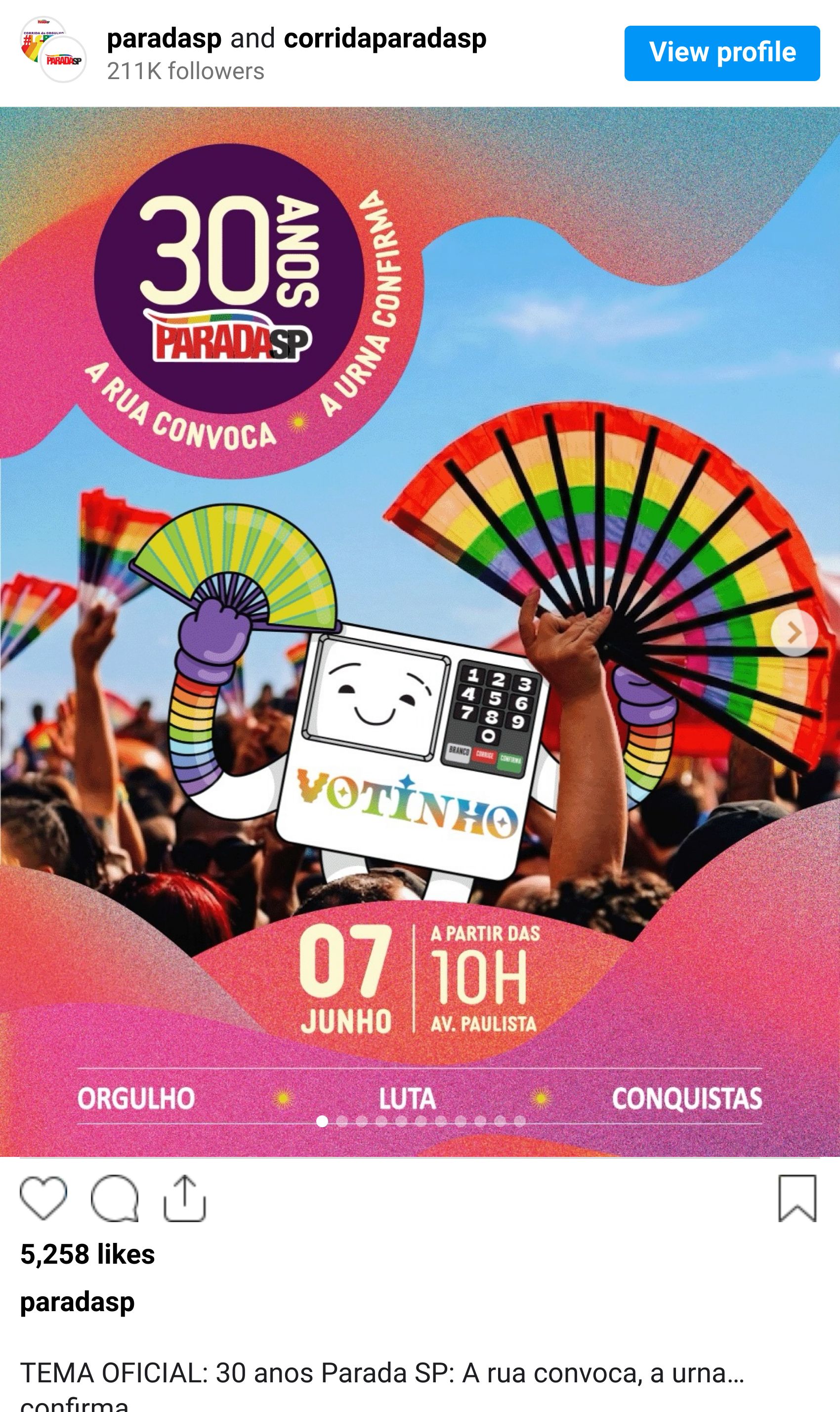
The parade takes place on Avenida Paulista, São Paulo's main commercial and cultural boulevard. The 2026 edition, the 30th anniversary, is confirmed for Sunday, June 7. Festivities in the surrounding neighborhood begin Wednesday June 3 and build through the weekend.
The route runs approximately 2.5 kilometers and is lined with trios elétricos, the large music trucks that are also a staple of Brazilian Carnival. Each truck carries a different DJ or performer. The sound overlaps between trucks, which creates a wall of music along the entire stretch. It is genuinely overwhelming in the best way the first time you experience it.
There is no entry ticket, no registration, and no formal structure for participants. You walk, you dance, you stop, you move on. Floats from LGBTQ organizations, advocacy groups, and corporate sponsors join the parade alongside thousands of individual participants.
What to Expect on the Day
Arrive early if you want space along the central median on Avenida Paulista. By midday the crowds are dense enough that moving becomes difficult. The parade officially starts in the late morning and runs into the early evening, but the surrounding streets stay active until well past midnight.
Bring water. June in São Paulo sits in the city's dry season, which means lower humidity and warm temperatures, usually in the low-to-mid 20s Celsius. The sun on a clear June day at the altitude of São Paulo (around 760 meters) is more intense than most visitors expect. Sunscreen, water, and flat shoes are the practical essentials.
The neighborhoods immediately surrounding Avenida Paulista, Jardins, Consolação, and Vila Madalena, fill with satellite events throughout the day. Bars, rooftop parties, pop-up markets, and club nights run in parallel to the main parade. If the crowd density on the parade route gets too much, ducking into the side streets gives you a version of the same energy at lower volume.
Where to Stay in São Paulo for Pride
The Jardins and Consolação neighborhoods are the best base for Pride in São Paulo. Both are walkable to Avenida Paulista, have a high concentration of LGBTQ-friendly hotels and apartments, and sit within the area where most of the satellite events happen.
Booking.com is the first place to search for the Jardins area, filter by guest rating and check cancellation policy carefully, since Pride weekend often comes with non-refundable rates from hotels that know the demand. For groups or travelers who want a private apartment near the parade route, Airbnb consistently has good options in Consolação and Bela Vista.
Book three to four months ahead. São Paulo Pride weekend sells out accommodation across the city faster than any other single event on the calendar. Waiting until April for a June parade is already late.
Rio de Janeiro Pride 2026
Here is the most important clarification for anyone building a Brazil Pride itinerary: Rio's main Pride parade does not happen in June.
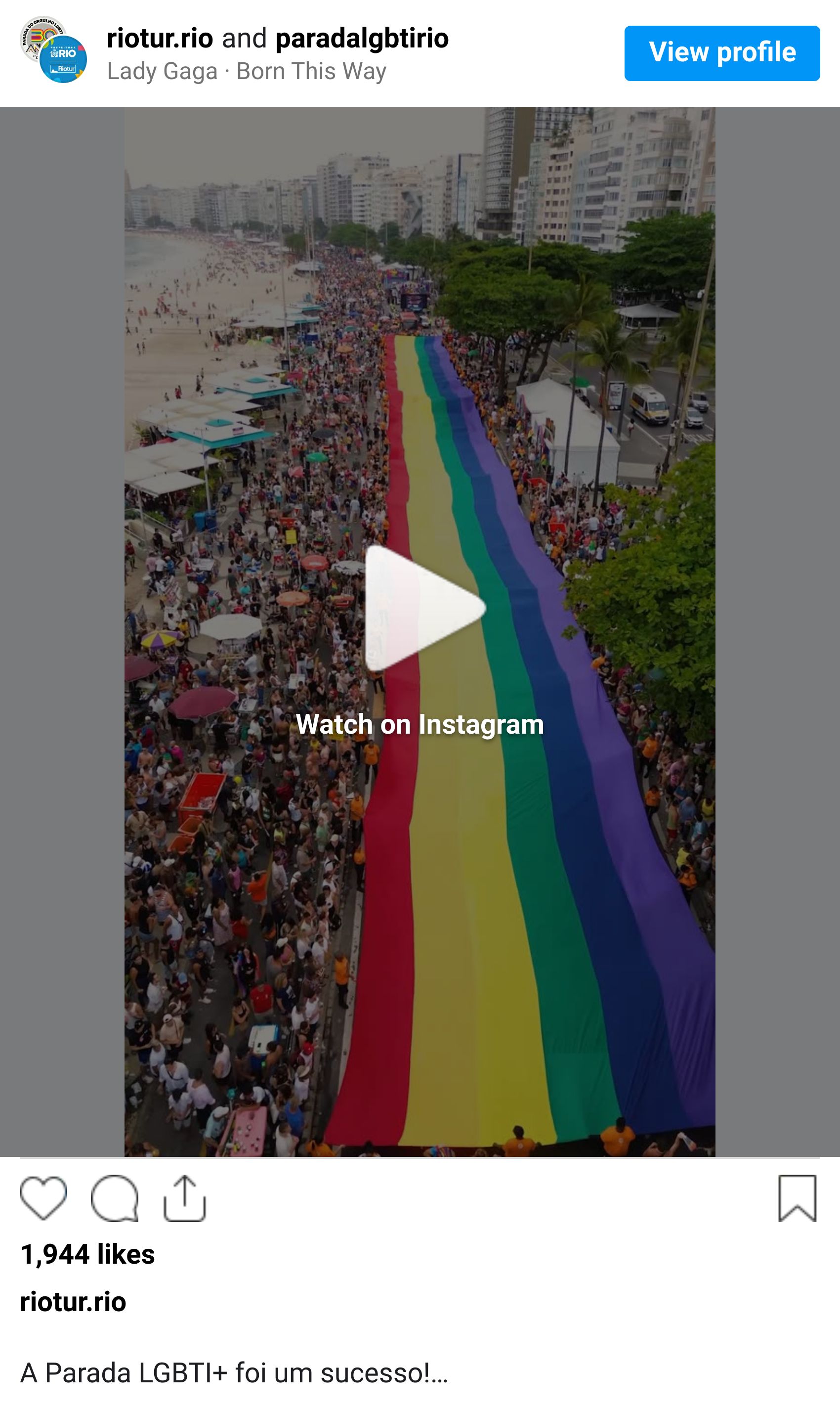
The Parada do Orgulho LGBT do Rio de Janeiro is held in late November, not during Pride Month. If your plan involves attending both a São Paulo parade in June and a Rio parade in the same trip, you will need a separate visit, the two events are five months apart.
What Rio does offer in June is something different and arguably more representative of the city's everyday LGBTQ culture: the Farme de Amoedo beach scene in Ipanema, circuit parties and club nights in Ipanema and Leblon, and a general sense of LGBTQ-friendly social life that is active year-round.
Farme de Amoedo is a stretch of Ipanema beach that has been an LGBTQ gathering point for decades. There is no fence, no wristband, no event, it is just the beach where people go, and it has been that way long enough that the social infrastructure around it (bars, kiosks, nearby accommodation) reflects that community. On weekends in June it is busy, cheerful, and genuinely inclusive in a way that feels organic rather than marketed.
For the full breakdown of where to stay, which neighborhoods to use as a base, and what to do across Rio's LGBTQ scene beyond June, the LGBTQ+ destination guide for Rio has everything you need.

Other Cities Worth Knowing About
São Paulo is the headline. Rio is the beach culture. But Brazil's Pride calendar extends well beyond those two cities, and for travelers who want a more local experience, less international tourist density, more Brazilian community energy, the other cities are worth taking seriously.
Florianópolis
Florianópolis holds its Pride celebration in late June and draws a younger, beach-focused crowd. The island city in Santa Catarina state has a strong surf and outdoor culture, and the LGBTQ community there has built events that reflect that identity. Praia da Joaquina and Praia do Campeche are popular during summer season. If your travel dates fall in the last week of June, Florianópolis is a legitimate alternative to São Paulo for a different experience of Pride in Brazil.
Salvador Bahia
Salvador's Parada LGBT is one of the oldest in the country and draws substantial crowds, typically in late June. What makes Salvador distinct is the cultural context: the city's Afro-Brazilian heritage, the presence of candomblé culture, and the historic Pelourinho neighborhood add a dimension that you will not find in São Paulo or Rio. The intersection of LGBTQ identity and Afro-Brazilian cultural identity in Salvador is visible and celebrated in a way that reflects something specific about the city's history.
If you have flexibility in your itinerary, Salvador is worth building in, not as a replacement for São Paulo, but as an addition that makes the trip more textured.
Recife and Olinda
Recife typically holds its Pride event in mid-June. The twin cities of Recife and Olinda in Pernambuco state offer a combination of LGBTQ Pride events, colonial architecture in Olinda, and the distinctive nordestin culture of Brazil's northeast. The scale is smaller than São Paulo by a significant margin, but so is the international tourist presence, which is either a feature or a drawback depending on what you are looking for.

Is Brazil Safe for LGBTQ Travelers During Pride?
Brazil records some of the highest rates of anti-LGBTQ violence in the world. That is a real data point and not one worth softening for the sake of an optimistic travel piece.
The context that matters for Pride Month specifically is this: the events in São Paulo, Rio, Salvador, and other major cities operate in a different environment from everyday public life in Brazil. These are massive public gatherings with millions of participants, media coverage, political significance, and significant security presence. The São Paulo parade has been held annually since 1997 and has grown into one of the largest public events in the country. The violence statistics that define Brazil's broader LGBTQ landscape do not map directly onto the Pride parade experience in São Paulo in June.
That does not mean you travel without awareness. The standard urban travel precautions apply: be aware of your surroundings in unfamiliar neighborhoods, do not flash valuables, use Uber rather than flagging street taxis at night, and know where your accommodation is before you leave the event. The gay-friendly zones around Avenida Paulista, Jardins, and Ipanema are generally safe for openly LGBTQ travelers in ways that more peripheral neighborhoods may not be.
For a fuller picture of safety in Brazil as a whole, read our guide on whether Brazil is safe to travel in 2026.
Practical Planning: How to Get There and When to Book
The main international gateways into Brazil are São Paulo Guarulhos (GRU) and Rio de Janeiro Galeão (GIG). For Pride Month, São Paulo is the primary destination, Guarulhos puts you inside the city in under an hour by the Aeroporto Link express train or Uber.
Set a flight price alert now using Skyscanner. São Paulo Pride weekend is one of the most price-sensitive windows in Brazil's flight calendar. Prices from North America and Europe into Guarulhos spike in the two to three weeks before the parade and stay elevated through the weekend. Booking three to four months out is the realistic window for reasonable fares.
If you are combining São Paulo and Rio, which makes sense as a two-city itinerary, domestic flights between the two cities take about an hour. Both GOL and LATAM run frequent services on this route. Use Skyscanner's multi-city search to book the international and domestic legs together.
For a detailed breakdown of finding cheap flights into Rio, see our guide to cheap flights to Rio de Janeiro 2026.
For full trip planning beyond the Pride events, read how to plan a trip to Brazil 2026.
Recommended Travel Tools
Tour Radar
Good for safe and professional organized group tours.
Booking.com
Helpful for private studios and long term deals.
Skyscanner
Simple for tracking flight prices in and out of Brazil.
HolaFly
Reliable eSIM for immediate mobile data in Brazil. Get 5% discount on all plans.
Brazil Travel Essentials
Everything you need for Brazil, and nothing you don't.
Kiwi
Great for multi city travel across South America.
Plan Your Brazil Pride Trip
Brazil in June 2026 is one of the most genuine celebrations of LGBTQ culture and community anywhere in the world. The São Paulo parade is a once-in-a-trip experience at a scale that simply does not exist elsewhere. Salvador and Florianópolis offer something more intimate. Rio gives you the beach culture that runs year-round.
Getting there takes planning: book accommodation three to four months ahead for São Paulo Pride weekend, set flight alerts early, and give yourself more than just the parade weekend if you can. A week in São Paulo around the event, with a few days in Rio or Salvador on either side, is a genuinely memorable way to experience Brazil.
For travel insurance that covers the full trip, SafetyWing is what we use for extended international travel. Their Nomad Insurance plan covers trip interruptions, medical expenses abroad, and emergency evacuation, worth having for a trip of this scale.
For small group tour options that cover Brazil's major destinations and can be combined with a Pride trip extension, G Adventures runs Brazil itineraries year-round with departure dates that work around the June calendar.
FAQ
When is the São Paulo Pride parade 2026?
The São Paulo Parada do Orgulho LGBT 2026, the 30th edition, is confirmed for Sunday, June 7, 2026. The surrounding neighborhood events run from Wednesday June 3 through the weekend.
Is Pride Month in Brazil safe for international LGBTQ travelers?
Pride events in São Paulo, Rio, and other major Brazilian cities take place in a context of large public gatherings with significant security presence and broad community attendance. Brazil has a complicated overall record on LGBTQ violence, but the Pride parade events specifically are among the safest and most celebrated public spaces in the country. Standard urban travel awareness applies outside the immediate event zones.
What is the biggest Pride event in Brazil?
The São Paulo Parada do Orgulho LGBT is the world's largest Pride parade by attendance, drawing more than three million people along Avenida Paulista in recent years.
Is Rio Pride in June?
Rio's main Pride parade, the Parada do Orgulho LGBT do Rio de Janeiro, takes place in late November, for 2026, the date is November 29. Rio does have an active LGBTQ scene in June, particularly around the Farme de Amoedo beach stretch in Ipanema, but it is not a formal parade event.
Do I need to buy tickets for the São Paulo Pride parade?
No. The São Paulo parade is free to attend. You do not need to register or purchase a ticket. Some satellite parties and circuit events in the surrounding neighborhoods charge entry.
What should I wear to Pride in Brazil?
Dress for the weather and the celebration. June in São Paulo is warm and dry, typically in the low-to-mid 20s Celsius. Comfortable shoes are essential for the parade route. Express yourself, Brazilian Pride crowds are colorful and creative. Leave valuables at your accommodation.
Are there LGBTQ group tours to Brazil Pride?
G Adventures runs small group tours across Brazil that can be paired with Pride travel. For travelers who want the support structure of a guided group alongside their own Pride event itinerary, their Brazil itineraries work as a framework for building the broader trip.
Affiliate Disclaimer: Some of the links in this post are affiliate links, which means if you purchase through them, Cheers to Travels may earn a small commission, at no extra cost to you. We only recommend products we truly believe in.


